Professional Supplements for Wise Athletes (click to see the huge “always on” discount)
Affordable (best pricing by far) Blood Testing at GoodLabs (use code WISE for 20% discount)
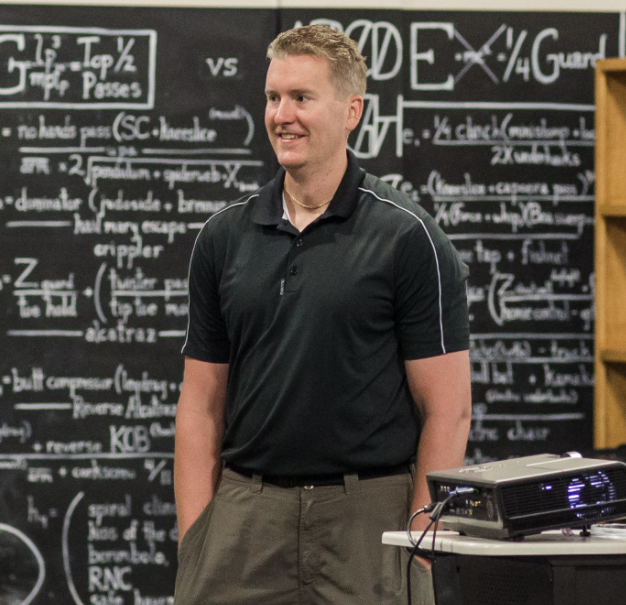
Mike T Nelson, PhD
- Dr. Mike blends deep academic knowledge with practical, field-tested insights to burn fat, build strength, and recover more effectively.PhD in Exercise Physiology from University of Minnesota
- BA in Natural Science from St. Scholastica
- MS in Biomechanics from Michigan Technological University
- Adjunct Professor in Human Performance for Carrick Institute for Functional Neurology
There’s a fight on the internet about VO₂max. One camp treats it as the single number that rules your healthspan — get it as high as humanly possible, no matter the cost. Another camp says it’s overhyped, mismeasured, and not worth your attention at all. As usual, the loudest voices are the least useful.
So I brought the question to someone I actually trust: Dr. Mike T. Nelson, back on the show for his fourth conversation with me. Mike is the rare internet fitness voice with both the science and the scruples, and he’s written about this exact controversy. My question for him was simple and a little selfish: I’m 64, I don’t have unlimited time or unlimited recovery. How much should someone like me actually be chasing VO₂max — and once I’ve got “enough,” where should my effort go instead?
His answer is what this episode is about, and it comes down to a sweet spot. Yes, VO₂max is one of the most powerful longevity predictors we’ve ever measured — climbing out of the bottom of the pack buys you more protection than almost anything else you can do. But the benefit curve flattens. There’s a point where squeezing out another few percent costs enormous effort for very little return — effort that would do far more good aimed at whatever your real weak link is.
Along the way Mike takes apart some sacred cows. Why zone 2, for most of us, is not the magic everyone says it is. How to actually program intervals so you’re building speed instead of just collecting misery. Why your fading max heart rate might be partly a use-it-or-lose-it problem. And how something as quiet as your breathing rate while you sleep can tell you whether you’re sabotaging your own oxygen delivery.
If you’ve ever stared at the VO₂max number on your watch and wondered whether to celebrate it, panic about it, or ignore it — this one’s for you.
Key learnings
- VO2max predicts longevity — strongly, but with a caveat. The mortality benefit of moving from very unfit to fit appears larger than almost any other measured intervention, exceeding smoking cessation. But most of that effect comes from rescuing the bottom of the range, not pushing an already-good number higher. (Human observational data; reverse causality is a standing confounder.
- The “VO2max is overblown” controversy is mostly noise. The complaint that studies use METs and submax estimates rather than gold-standard lab tests is technically correct — but the surrogates and the lab measures largely agree, so the distinction doesn’t change the practical conclusion.
- VO2max is limited by your weakest link — either oxygen delivery (heart, blood flow) or oxygen utilization(muscle, mitochondria). Train the limiter. Note Mike’s own caveat: the limiter may not even be stable week to week in the same person.
- A higher ceiling makes everything easier. Like a bigger 1RM makes submaximal lifts feel light, a higher VO2max makes all sub-threshold work more sustainable.
- For raising VO2max: accumulate time at goal pace. Use 2–6 minute intervals at (or slightly above) target pace, and add volume only if you can hold the pace. Most people tolerate this only 1–2× per week.
- Short anaerobic intervals work — but quality over fatigue. 30–180 second repeats build power and lactate handling, but stop the set once output drops off meaningfully. Grinding through massive drop-offs just trains fatigue.
- Zone 2 is overrated for most non-elites. Mike argues ~90–95% of people get more cardiac-development return from Zone 3 touching Zone 4 (e.g., 6-minute progressives) than from the 2–3 weekly hours Zone 2 demands. (This is his most contested claim and runs against the polarized-training consensus he acknowledges holds for elite endurance athletes.)
- Defend your max heart rate as you age. Falling max HR drives much of age-related VO2max decline — and some of that may be disuse, not pure aging. “Reach and touch” ~90–95% of max HR about once a week. (Anecdotal; max HR decline is largely age-intrinsic in the literature, so treat the disuse angle as a hypothesis.)
- Strength training helps VO2max indirectly by making each stride, stroke, or pedal more submaximal. For most older athletes, added muscle is not a performance penalty.
- CO2 tolerance matters more than people think. Over-breathing blows off the CO2 you need (via the Bohr effect) to actually offload oxygen into muscle. Longer exhales, nasal breathing, and lower resting respiratory rate can help — though part of the benefit is likely neuroplastic stress-inoculation rather than pure gas exchange.
- Know the sweet spot. ~50 mL/kg/min is a strong general target. Below the 75th percentile, gains come relatively fast and are worth chasing. Above it, returns flatten — at that point, only pursue more if VO2max is a genuine competitive priority.
- The three most longevity-protective trainable traits: VO2max, lower-body strength/muscle mass, and grip strength.
Summary
- VO2max gets called the single best predictor of longevity — and then, predictably, the internet declared it overblown. In this episode, Dr. Mike T. Nelson cuts through both extremes. He explains what VO2max actually measures (the lesser of two capacities: your ability to deliver oxygen via heart and blood flow, and your ability to use it at the mitochondria), why the “it’s just METs, not real VO2max” controversy is technically true but practically useless, and why a higher ceiling makes everything below it easier — the same way a bigger deadlift makes submaximal loads feel light.
- The heart of the conversation is what to actually do. Mike walks through a complete training hierarchy for the older athlete: accumulate time at goal pace in 2–6 minute intervals, use short anaerobic repeats only while you can hold your output, and — controversially — spend far less time in Zone 2 than the internet insists, favoring Zone 3 touching Zone 4 for most non-elites. He covers the role of strength training, the underrated importance of CO2 tolerance and breathing mechanics, and the “reach and touch” approach to defending your max heart rate as you age.
- Most importantly for Wise Athletes, Mike defines the sweet spot. Past roughly the 75th percentile (or about 50 mL/kg/min as a strong general target), the returns on chasing a bigger VO2max flatten hard. For the older athlete with finite time and energy, that’s the asymmetric-risk insight: get to “good,” then redirect effort toward whatever’s actually weakest — because beyond that point, ten percent more VO2max may cost what a fifty percent gain elsewhere would.
Related Episodes & Links:
- Episode 178 | Athletic Longevity Isn’t Easy | Brenden Egan PhD
- Episode 154 Adaptive Range Expansion for Peak Performance | Mike T Nelson PhD
- Episode 144 | Muscle for Athletic Performance | Mark Tarnopolsky MD PhD
- Episode 143 | Chronic Overbreathing | George Dallam PhD
Help the show:
3 ways to support our show:
- Leave a review (or share this episode)
- Check out our Fullscript site to save big on high quality supplements. Thank you!
- Email us your questions at info@wiseathletes.com.

